
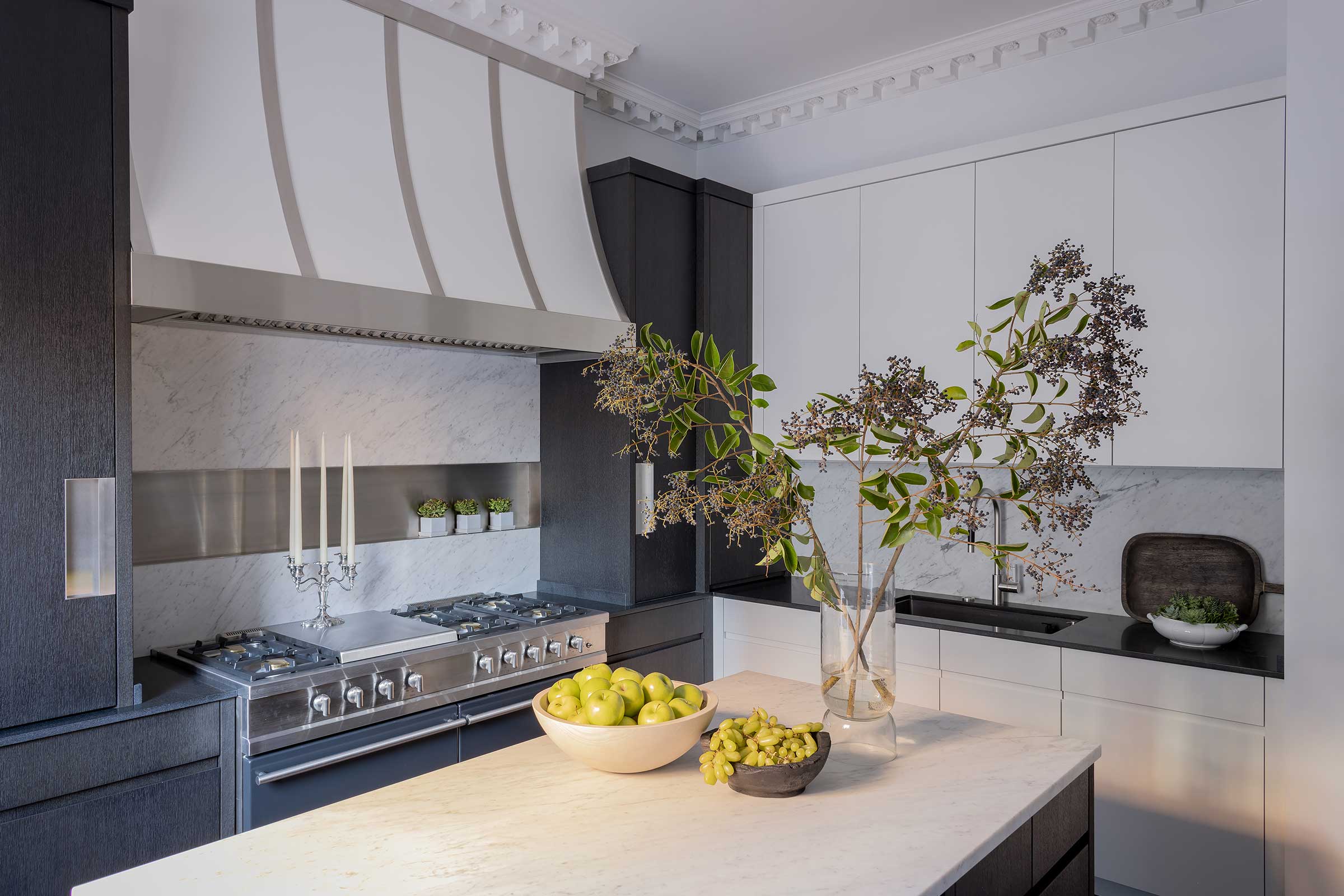
There’s a term in Italian—sprezzatura—that describes a kind of studied ease: the ability to make something difficult appear effortless. First articulated during the Renaissance, it reflects a quiet discipline—where rigor and intention are present, but not immediately visible.
Over time, it’s become a useful lens for how I approach residential architecture—particularly when working within an existing structure. It helps ensure that additions and alterations feel integrated rather than imposed, allowing the home to evolve naturally while maintaining a sense of ease and timelessness.
When decisions around proportion, alignment, and flow are carefully resolved, the design recedes—and what remains is a home that simply feels right.
Brownstone Renovation
Seamless Flow Within Constraint
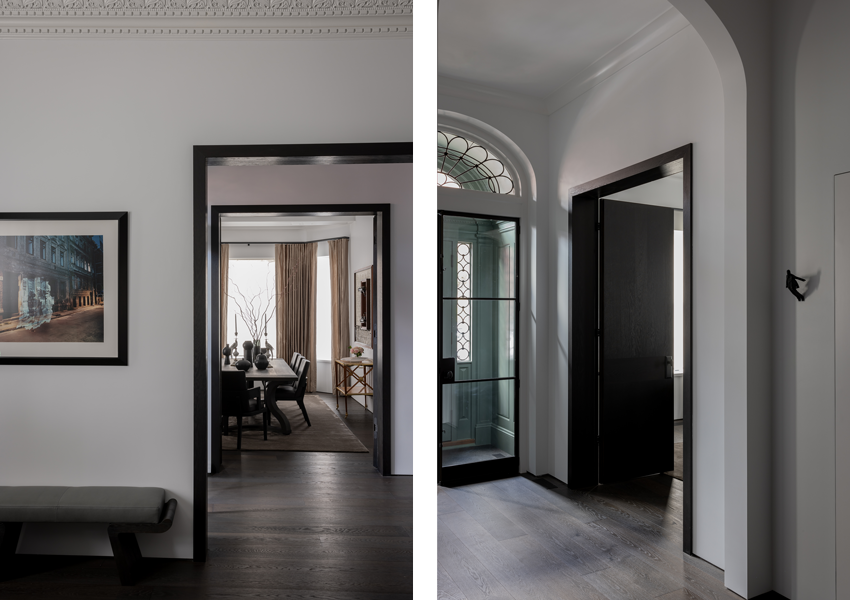
Working within a historic Boston brownstone presents a particular kind of discipline. The structure is fixed, the proportions are inherited, and the opportunities for intervention are often subtle rather than expansive.
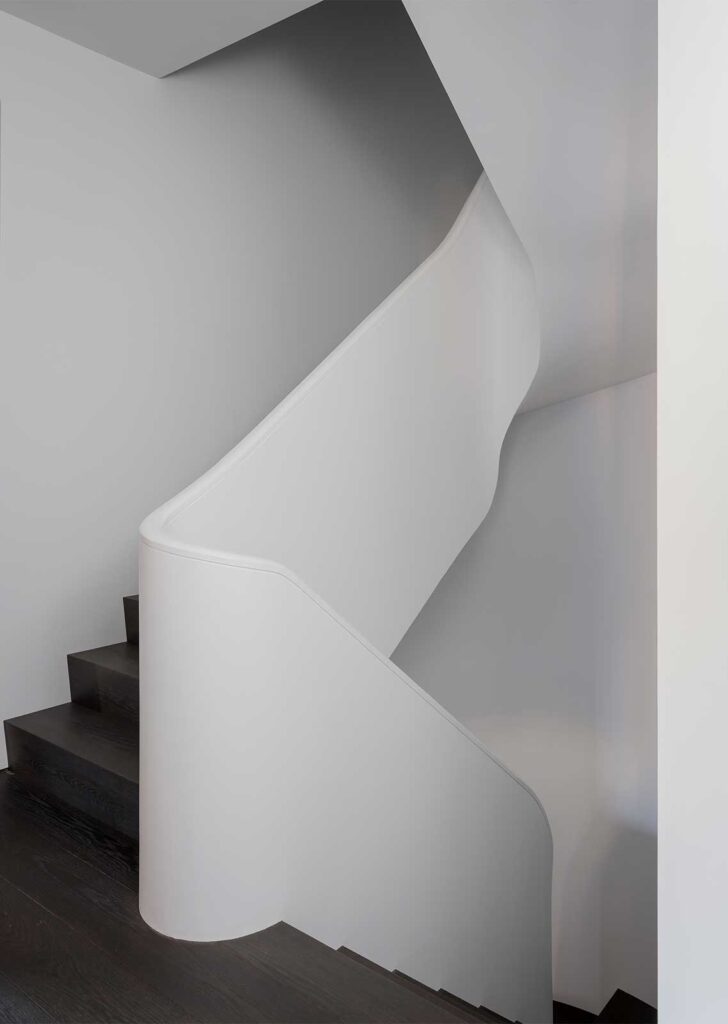
In this project, the focus was on creating a sense of continuity—both vertically and horizontally—so that movement through the home feels natural and uninterrupted. Alignments between openings, the refinement of the stair, and the integration of new millwork were all carefully considered to bring clarity to the existing framework without calling attention to the intervention itself.
The challenge, and ultimately the goal, was to allow the new work to feel as though it had always belonged. When resolved well, the transitions are nearly imperceptible—and the experience of the space feels inevitable, even though it is anything but accidental.
Back Bay Renovation
Restraint + Proportion
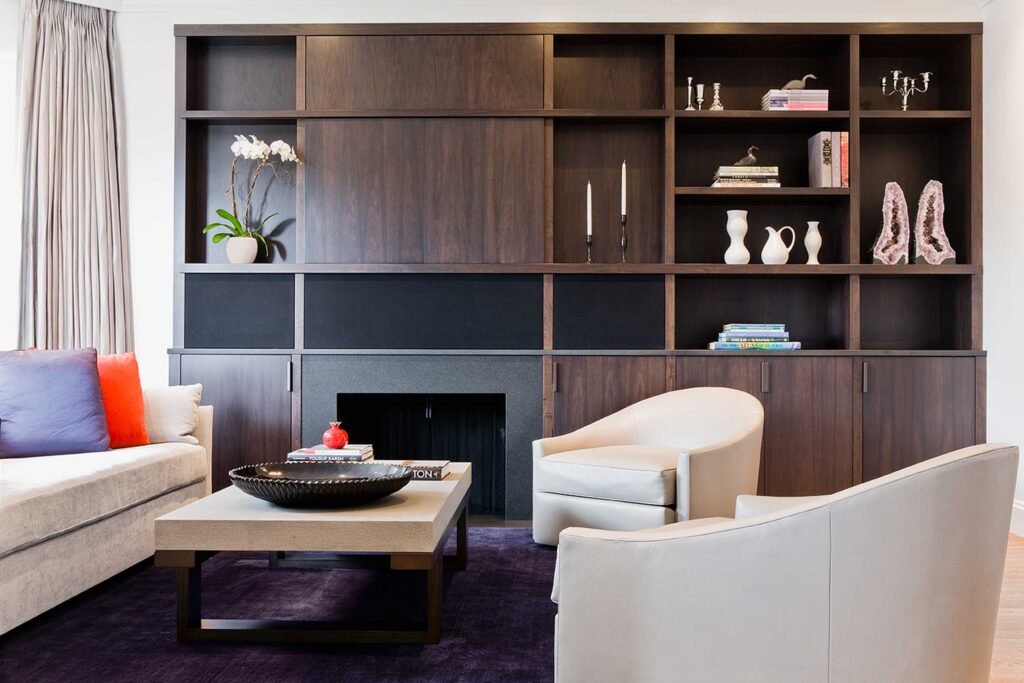
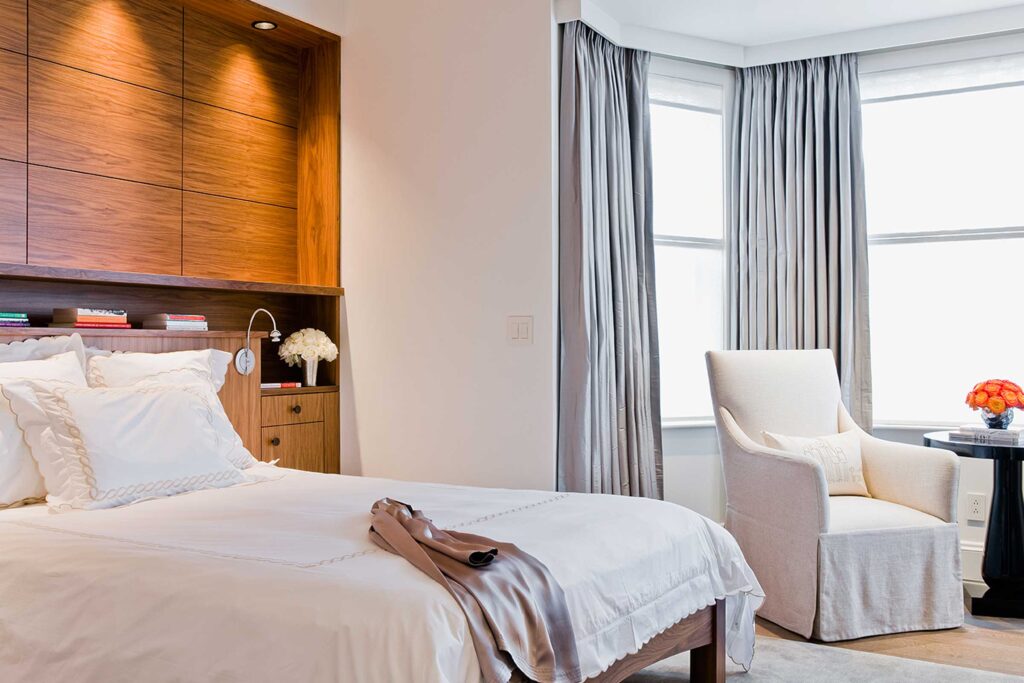
In this Back Bay renovation, the challenge was less about working within constraint and more about establishing clarity through restraint. Two adjacent units were combined to create a single residence, requiring a careful rethinking of circulation, proportion, and how the spaces would read as a cohesive whole.
Rather than introducing complexity, the design focused on editing—paring back elements to allow the architecture to feel calm and resolved. The millwork wall, for example, brings order and rhythm to the living space while quietly integrating storage, display, and function. In the bedroom, material continuity and soft transitions reinforce a quiet confidence without relying on excess.
The result is a home that feels composed rather than constructed—where the underlying rigor is present, but intentionally understated.
Westwood Renovation
Integration + Timelessness
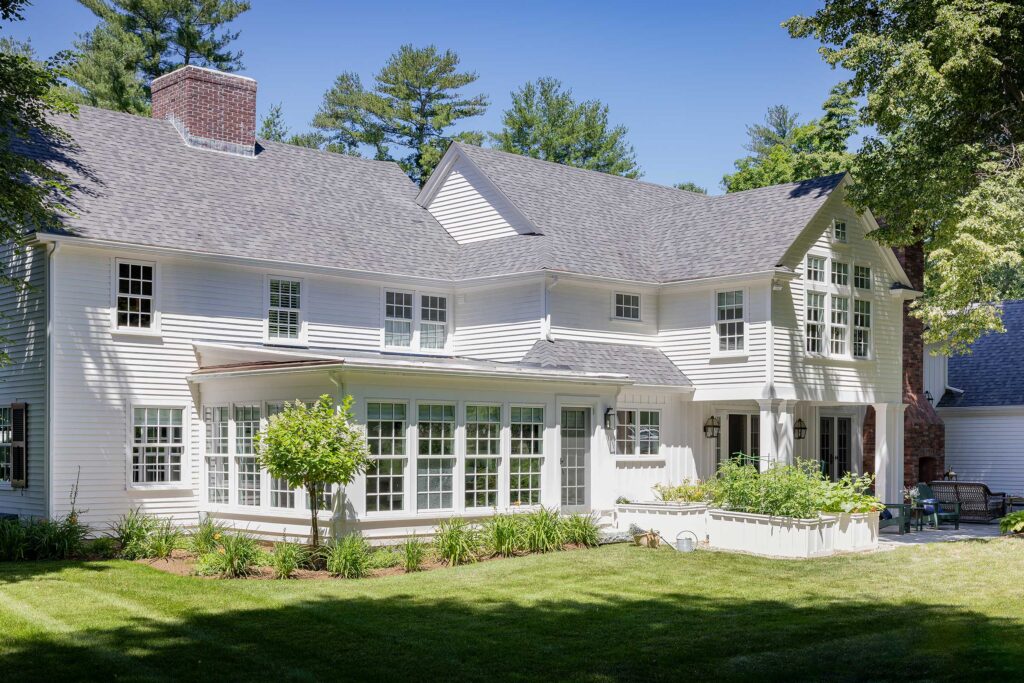
In this Westwood renovation, the work centered on expanding a traditional New England colonial into a home that feels as though it has evolved over time. Rather than a single, defined addition, the design approach was to create a series of connected volumes—each scaled and proportioned to relate to the original structure while contributing to a more expansive whole.
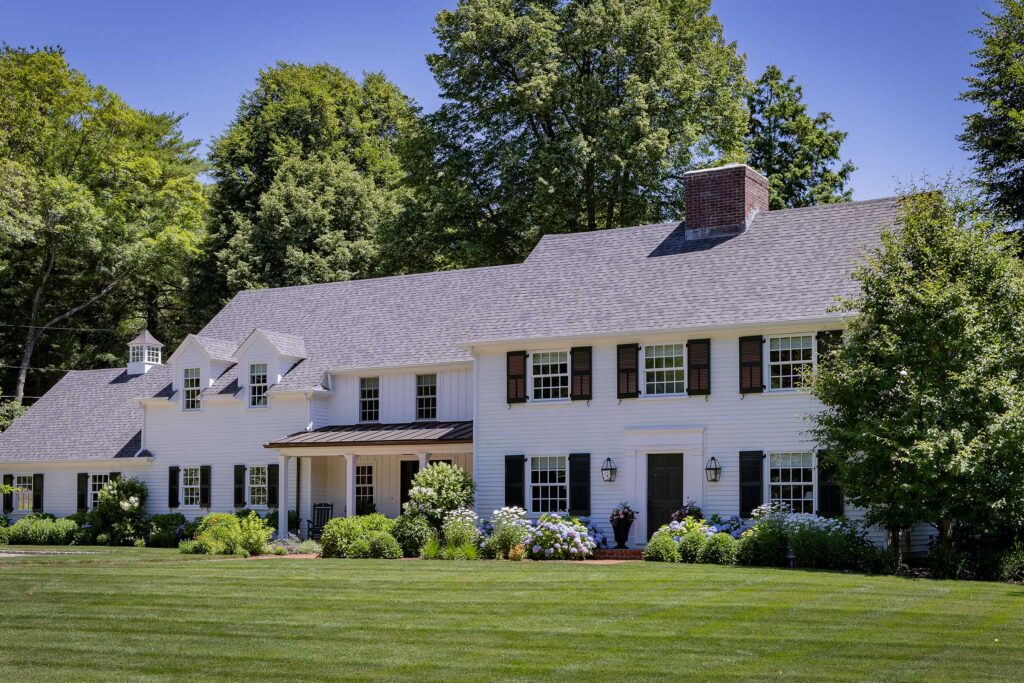
Careful attention was given to rooflines, window placement, and the rhythm of the façade, allowing new elements to integrate naturally with the existing house. The goal was not to replicate the original, but to extend its logic—so that the distinction between old and new becomes less apparent over time.
The result is a composition that feels both intentional and unforced—a house that appears to have grown into its current form, rather than having been reimagined all at once.
Across these projects, the goal is consistent: to create homes that feel natural in their composition and uncontrived in their experience.